
Paying someone to clear rubbish? Cheshire West says ask for a waste carrier licence, check it on 0300 065 3000 and get a receipt. Campaign runs to 25 Oct.
Anyone in Cheshire West thinking of paying a man with a van to clear out a garage or a loft is being asked to make three checks first, as Cheshire West and Chester Council backs Fight Fly-Tipping Fortnight, which runs from Monday 12 to Sunday 25 October 2026.
The campaign, run by the charity Keep Britain Tidy, is aimed at rogue waste traders who look like proper businesses online, take money to remove rubbish and then dump it illegally. The council’s warning is that professional-looking adverts, good reviews and low prices can all make an illegal operator look legitimate.
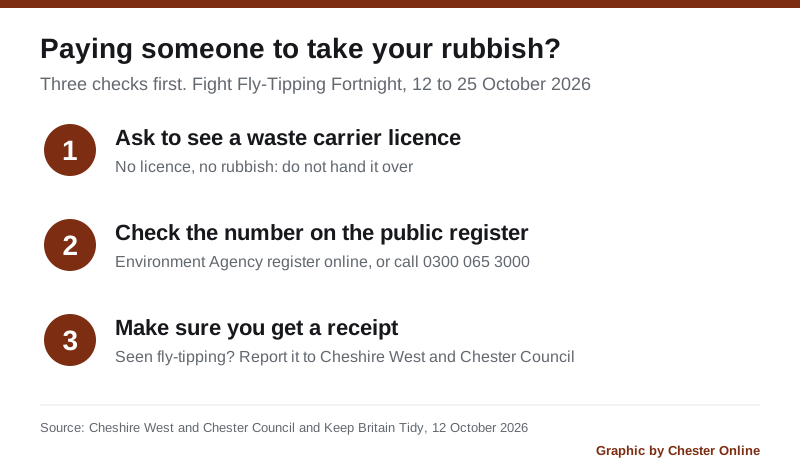
The three checks
Before you hand over any rubbish, the council says:
- Ask to see a waste carrier licence.
- Check the number on the Environment Agency’s public register, or call 0300 065 3000.
- Make sure you receive a receipt.
Keep Britain Tidy’s own campaign page puts it more bluntly: “If someone won’t give you the information you need, don’t give them your rubbish.”
Why it matters to the person who paid
The charity says that if you pay someone to take your waste away and they fly-tip it, you could still be held responsible and issued with a fixed penalty notice. It estimates that around 38% of fly-tipping incidents are linked to unlicensed “rogue traders” who find customers through cheap rubbish removal deals on social media, and that councils in England deal with an estimated 1.26 million fly-tipping incidents a year.
The release does not give a figure for Cheshire West itself. It says fly-tipping costs councils across England millions of pounds every year, money taken away from other local services.
What the council and the charity say
Councillor Stuart Bingham, the council’s Cabinet Member for Community Safety and Neighbourhood Pride, said:
“Fly-tipping damages our communities and costs taxpayers money that could be spent on other services.
“While our teams work hard to tackle the problem, everyone can play a part in preventing it. Before paying someone to remove waste, ask to see a waste carrier licence, check it on the Environment Agency’s public register and get a receipt. These simple steps can help protect you, your community and the local environment, and stop waste ending up on our streets, fields and public spaces.”
Allison Ogden-Newton OBE, chief executive of Keep Britain Tidy, said:
“Rogue waste traders are exploiting people’s trust and leaving communities and councils to deal with the consequences.
“A convincing advert, positive reviews and a cheap price can make an illegal operator look legitimate. Our message is simple: don’t fall for a
RubbishDeal. If it looks too good to be true, it probably is.”
What it means for you
- Clearing a house, garden or loft: use the three checks above on anyone you pay, however good the advert or the reviews look. Keep the receipt.
- Ordinary household waste goes out on your normal collection day: check yours on our Chester bin collection days page.
- If you see fly-tipping, report it through the council’s fly-tipping page. The council asks for the day, date and time, a description of what was left and how much, details of the people involved, and the make, colour and registration of any vehicle. Photographs help it investigate faster.
- Do not touch or move dumped waste. The council warns it can contain hazardous items such as syringes, broken glass, asbestos or toxic chemicals.
The council describes fly-tipping as a serious criminal offence that can lead to prosecution.
Have your say