
NHS plans take daily supervised toothbrushing into more SEND settings and mouth care onto children's wards across the region. Checked November 2026.
The NHS supervised toothbrushing scheme used in nurseries and schools across Cheshire West is to continue and expand, with more support for children at specialist SEND settings. NHS Cheshire and Merseyside has approved the plans, and it will also take a hospital mouth care programme from Alder Hey to children’s wards at district general hospitals across the region.
The announcement covers all of Cheshire and Merseyside. It does not name the hospitals, list new settings or give start dates, so it is not yet clear what changes first in Chester, Ellesmere Port or Northwich.
The Countess of Chester has a children’s medical ward and runs specialist clinics jointly with Alder Hey, but it has not been named as one of the hospitals. We will update this story when it is confirmed.
What the toothbrushing scheme does
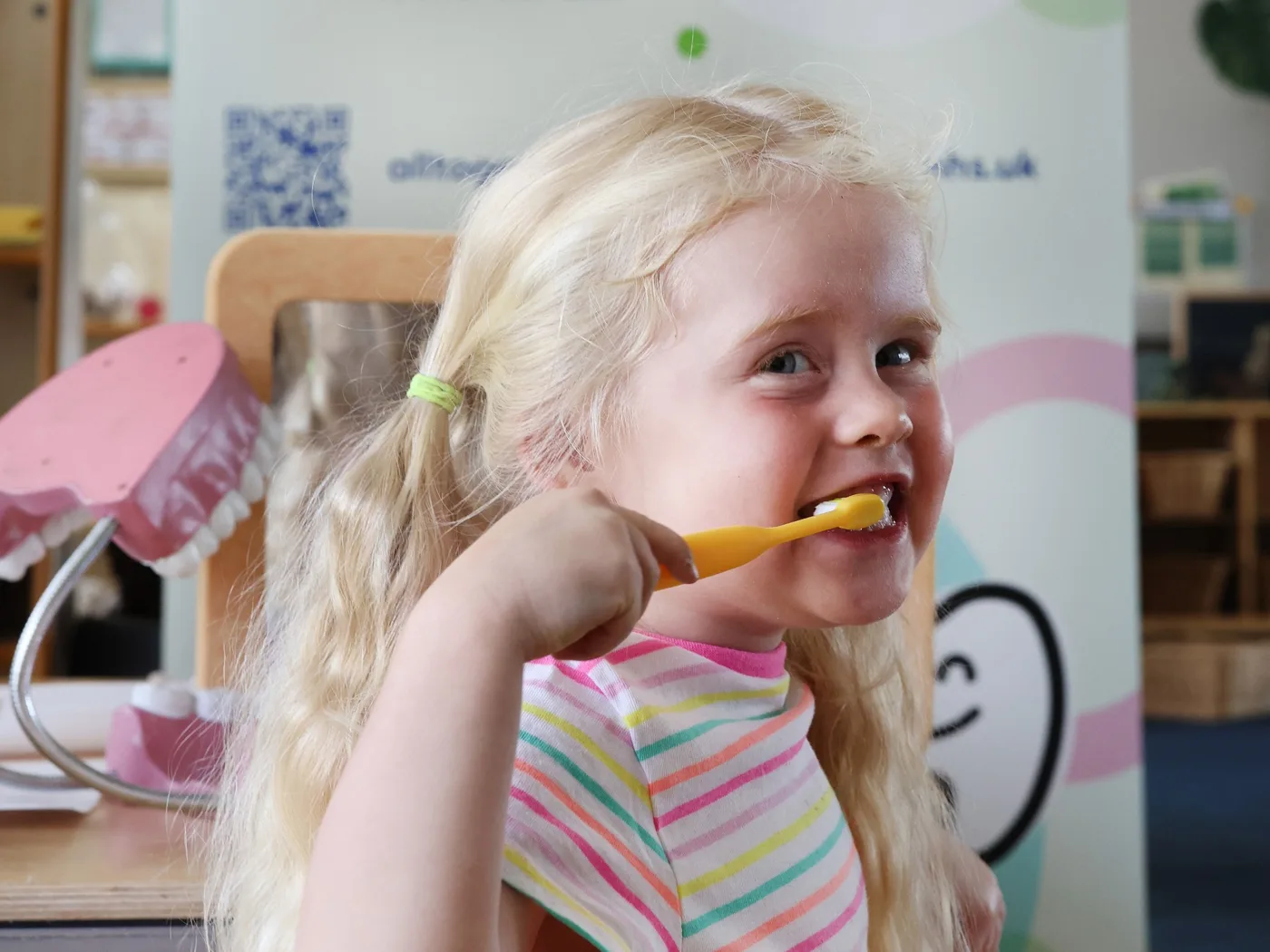
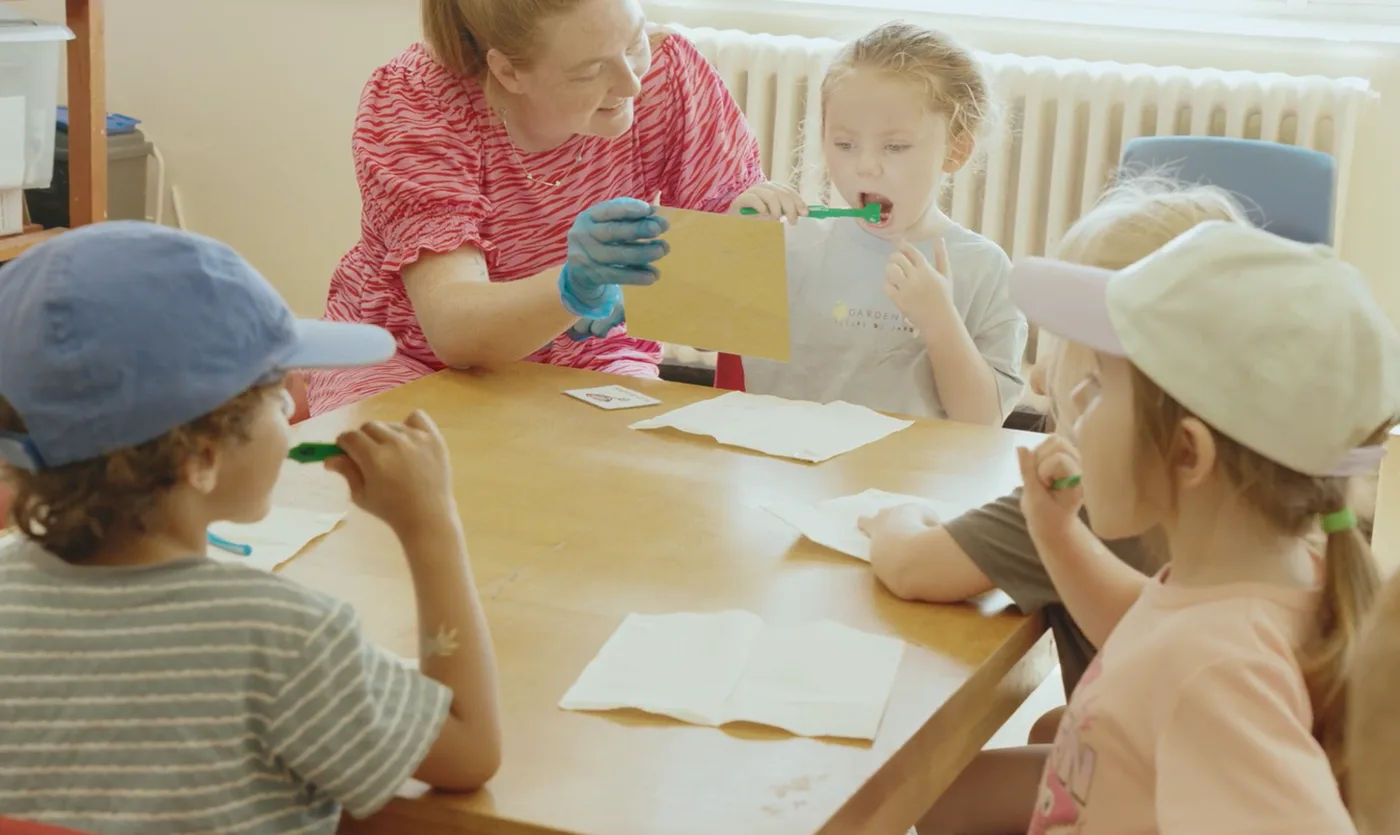
All Together Smiling started in April 2024. Children brush their teeth each day under supervision at nursery, school or a childminder’s. The NHS says it now supports around 18,400 children across 359 settings, and more than 451,000 oral health packs have gone out to families.
It is aimed at children aged 2 to 7 in the 20% most deprived areas of Cheshire and Merseyside, working with public health teams in all nine council areas. The packs contain a toothbrush, fluoride toothpaste and a leaflet.
An NHS list from August 2025, when 180 settings were taking part, named 10 in Cheshire West and Chester:
- The Oaks Primary School
- St Clares Primary School
- Frodsham Primary Academy
- Wolverham Primary and Nursery School
- The Acorns Primary and Nursery
- Lache Primary School
- William Stockton Primary School
- St Bernards Primary and Nursery School
- Dee Point Primary School
- Stanlaw Abbey Children’s Centre
The scheme has nearly doubled since then, so that list will be out of date. We could not find a newer one for the district.
Staff at one Cheshire West and Chester nursery told the programme after their training: “I didn’t realise how important it is to spit, not rinse, or how much toothpaste children actually need.”
How Cheshire West compares
Tooth decay is the leading cause of hospital admission among children aged five to nine, the NHS says, even though it is largely preventable.
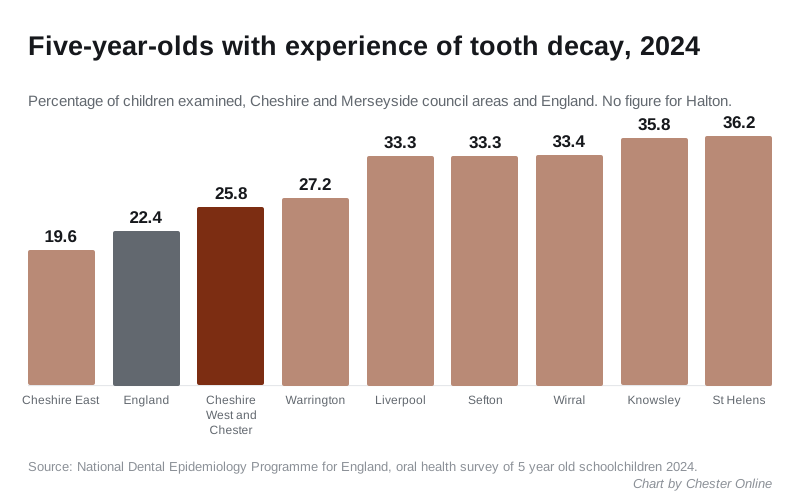
In the latest national survey, from 2024, 25.8% of five-year-olds examined in Cheshire West and Chester had experience of tooth decay. That is based on 260 children. It is above the England average of 22.4% but below the Cheshire and Merseyside figure of 31.2%.
Of the eight council areas in the region with a published figure, only Cheshire East was lower, at 19.6%. Warrington had 27.2%, Liverpool and Sefton 33.3% each, Wirral 33.4%, Knowsley 35.8% and St Helens 36.2%. The survey has no figure for Halton.
The NHS said in May that children in the most deprived communities are three and a half times more likely to need teeth taken out under general anaesthetic because of decay than children in the most affluent areas.
What changes for children with SEND
The next phase expands support for children and young people at specialist SEND settings. In August, the programme said it had given out more than 20,000 adapted packs to children with SEND, with adapted toothbrushes and non-foaming, flavourless toothpaste for children with sensory sensitivities. Children get the same items to use at home.
Prof. Ian Ashworth, Director of Population Health for NHS Cheshire and Merseyside, said: “Prevention is one of the most effective ways we can improve health outcomes for children and young people, and oral health is a vital part of that.
“The success of All Together Smiling and Mini Mouth Care Matters demonstrates the difference that early support, education and prevention can make, and we’re delighted to be able to build on that success by extending support to even more children and young people across Cheshire and Merseyside.
“Together, these programmes create opportunities to support children wherever they are, whether that’s in education settings, within their local communities or during a stay in hospital. By building on what has already been achieved, we can help more children develop positive oral health habits and support healthier futures.”
Dr Elizabeth Crabtree, Programme Director of the Beyond Children and Young People’s Transformation Programme, said: “We are incredibly proud of what has been achieved through All Together Smiling in partnership with local authorities, Public Health teams, early years and education settings, and delivery partners across Cheshire and Merseyside.
“The programme has demonstrated that, by working together, we can successfully embed prevention within everyday settings and reach thousands of children who may otherwise be at greater risk of poor oral health and wider health inequalities.
“This next phase of delivery provides an exciting opportunity to build on that success by bringing together complementary programmes and approaches to create a more joined-up oral health prevention offer for children and young people across community and hospital settings. Through continued collaboration, we can help ensure more children receive the right support at the right time, giving them the best possible start in life.”
Mouth care on children’s wards
Mini Mouth Care Matters helps hospital staff build oral health checks and good mouth care into everyday care. They can also connect children and families with NHS dental services where more help is needed.
Since it began at Alder Hey, the programme has supported more than 4,400 children and young people and trained more than 900 healthcare professionals, according to the NHS.
Dr Susana Dominguez-Gonzalez, Consultant Orthodontist at Alder Hey and Honorary Senior Clinical Lecturer at the University of Liverpool, said: “We are really pleased to have the opportunity to expand the Mini Mouth Care Matters programme across Cheshire and Merseyside, building on the work we are already doing at Alder Hey.
“When a child is in hospital, oral health can easily be overlooked, particularly when families have so many other things to think about. Through the programme, we have been working with staff on the hospital wards to make mouth care part of everyday care, helping them identify problems early and giving children, young people and families the advice and support they need.
“It has been great to see the difference the programme has made at Alder Hey, and we are looking forward to sharing what we have learned with colleagues across the region so that more children and young people can benefit.”
What it means for you
- If you run a nursery, school or childminding setting: the programme is free to eligible settings in the 20% most deprived communities and includes training, toothbrushes, toothpaste and storage racks. To check whether yours qualifies, email alltogethersmiling@alderhey.nhs.uk.
- If you are a parent: the programme’s advice for under-7s is to brush twice a day with family fluoride toothpaste (1450ppm), using a smear under the age of 3 and a pea-sized amount from 3 upwards. Children should spit rather than rinse, and an adult should supervise.
- If your child needs a dentist urgently: call your dental practice in the usual way. If you do not have one, use NHS 111 or the Cheshire and Merseyside dental helpline on 0161 476 9651.
Families and settings describe their experience in case studies and videos on the NHS Cheshire and Merseyside website.
Have your say