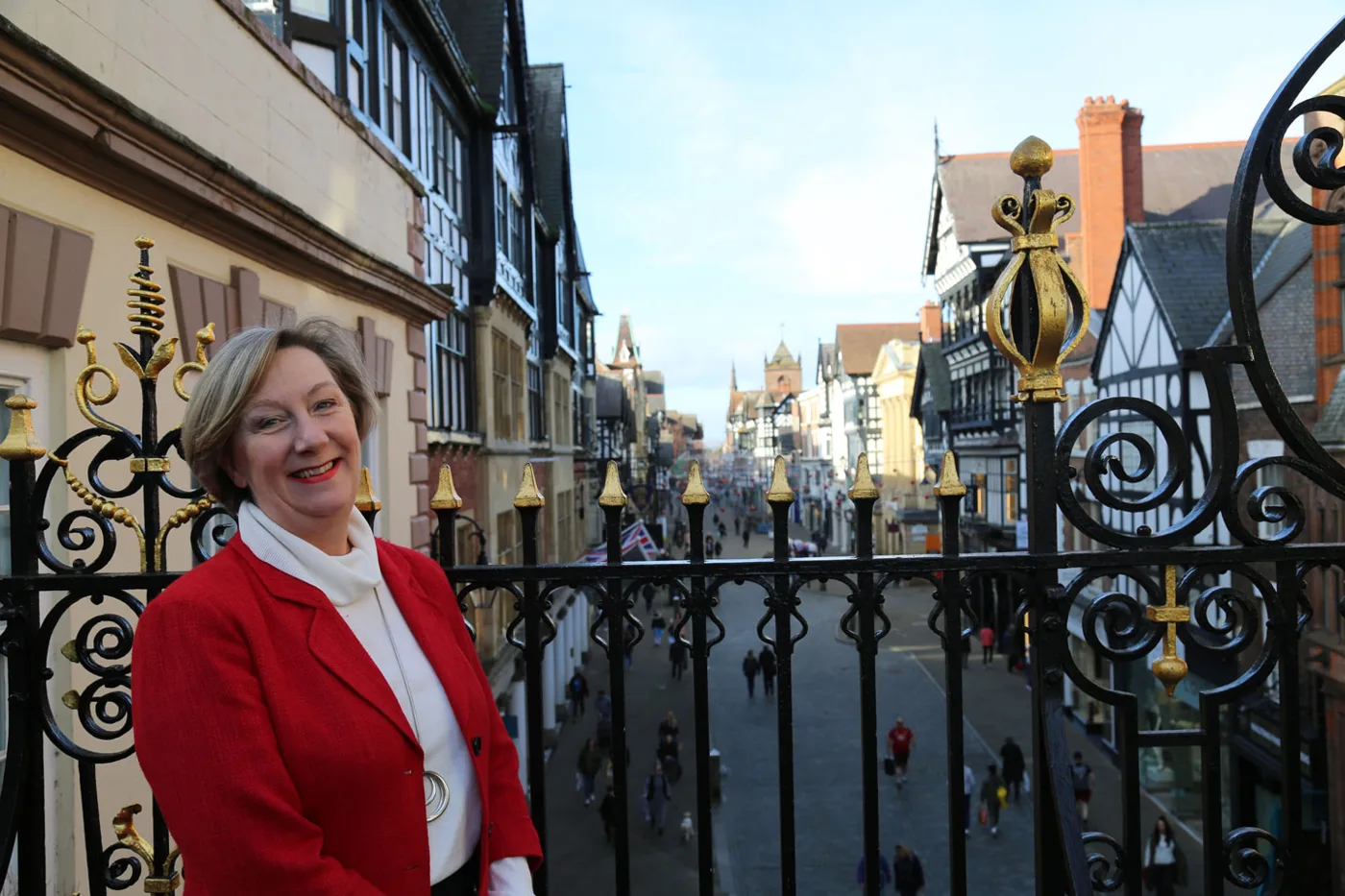

Drivers get five minutes to decide whether to park and a £20 cap for a mistyped plate. Chester MP Samantha Dixon cites a £100 fine for leaving a full car park.
A driver who pulled into a car park, found no space and drove straight out was sent a £100 charge weeks later. Another typed their registration in wrong and was charged £60.
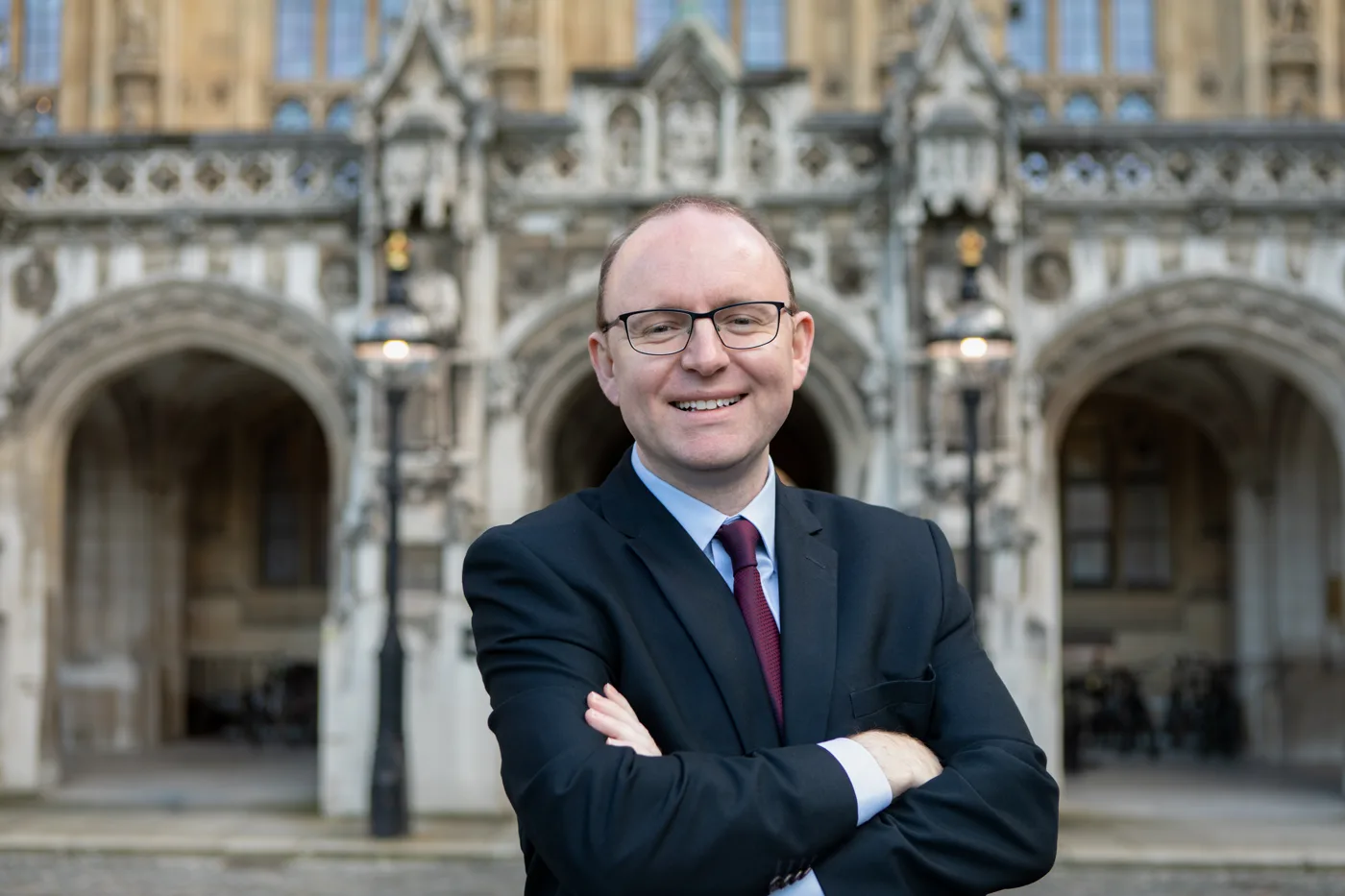
Updated 21 October: Mid Cheshire MP Andrew Cooper says the same complaints reach him from car parks in Northwich, Winsford and Middlewich.
Both are constituents of Samantha Dixon, the MP for Chester North and Neston. She has used their cases to welcome the Government’s new Private Parking Code of Practice, which was laid in Parliament today.
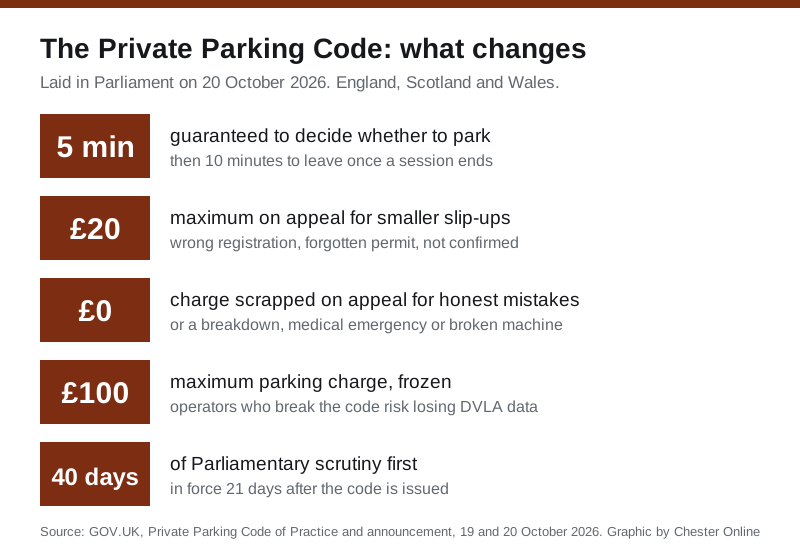
Under the code, the first driver would have had a guaranteed five minutes to decide whether to park. The second would face a charge of no more than £20 on appeal. That is according to the Government’s announcement, published on Monday night.
What the code changes
The new rules apply to private parking operators in England, Scotland and Wales. The Government says they will bring:
- five minutes to decide whether to park, and 10 minutes to leave once a parking session ends
- charges scrapped on appeal for honest mistakes, such as stopping briefly to check directions, and for a medical emergency, a breakdown or a broken ticket machine
- a £20 maximum on appeal for smaller slip-ups: forgetting a permit, entering the wrong vehicle’s registration, or forgetting to confirm it in the machine
- the maximum parking charge frozen at £100
- a new, fully independent Scrutiny and Oversight Board, with operators made to report data on the charges they issue and how appeals are handled
Operators who do not comply risk losing access to DVLA data. Without it, the Government says, it is far harder for them to identify a car’s registered owner and pursue a charge.
“This is really important to constituents”
Ms Dixon said she had heard from residents and from visitors to the area. In a statement from her office, she said:
“I really welcome the news that the Government is taking action on rip-off parking charges, giving motorists new rights to better challenge unfair parking charges.
“This is really important to constituents. I’ve received numerous complaints from residents as well as visitors after they have been charged following mere minutes in a car park they were unable to use.
“In one instance, a constituent of mine entered a car park, could not find a space and promptly left, only to find weeks later they were being fined an outrageous £100 for doing so. Another entered their registration number incorrectly and was fined £60.”
She added:
“These changes will limit the fines and more broadly give motorists greater flexibility. I welcome the measures announced as part of a wider package to ease the cost-of-living burden.”
Her office did not name the car parks involved.
“Across several in Northwich, Winsford and Middlewich”
Mid Cheshire’s MP, Andrew Cooper, has also welcomed the code. He says the problem is not one bad car park but several across his constituency:
“It will come as no surprise that since taking office I have been regularly contacted by constituents seeking support having been harshly penalised for genuine errors such as mistyping their numberplates or overstaying by a couple of minutes for reasons outside of their control.
“This isn’t fair, and doesn’t just take place at one car park, but across several in Northwich, Winsford and Middlewich.
“I’m glad this will give people across Mid Cheshire more breathing space, and reassurance that when they park, they won’t end up being ripped off.”
Like Ms Dixon’s office, his did not name the car parks.
The Prime Minister, Andy Burnham, said in the Government’s announcement: “Being a few minutes late back to your car or typing one digit of your numberplate wrong shouldn’t end with a hefty fine landing on your doormat.”
When it starts
Not yet. The code now faces a 40-day period of Parliamentary scrutiny before it can be issued. It then comes into force 21 calendar days after it is issued. The Government says arrangements for enforcing the new standards in the transition will be published on GOV.UK at that point.
It follows a public consultation that ran from July to September 2025 and drew 4,526 responses. The Government says just under 17 million private parking charges were issued in the UK last year.
Ministers have also promised to consult “as soon as possible next year” on the debt recovery fees added to unpaid private parking charges. That includes whether to cut the existing £70 cap or scrap the fees altogether.
What it means for you
- Nothing changes today. A private parking charge issued now is still handled under the current rules, so keep appealing through the operator in the usual way.
- Keep evidence. The new appeals process cancels charges where a driver can provide evidence that one of the listed situations applies, such as a breakdown or a broken machine. Photos of a faulty ticket machine, and your receipt, will help.
- This covers private car parks only. Council-run car parks in Chester work under their own rules. Our guide to parking in Chester lists every council tariff and the free bays.
The same announcement adds car clocking, winding back a car’s mileage, to the list of banned practices for businesses selling cars to consumers, under the Digital Markets, Competition and Consumers Act 2024.
Have your say